Guide · 15 July 2026
Delivering into buildings that were not designed for it
Heritage terraces, tight apartment lifts and clifftop sites. How specialist teams plan deliveries into properties with difficult access.
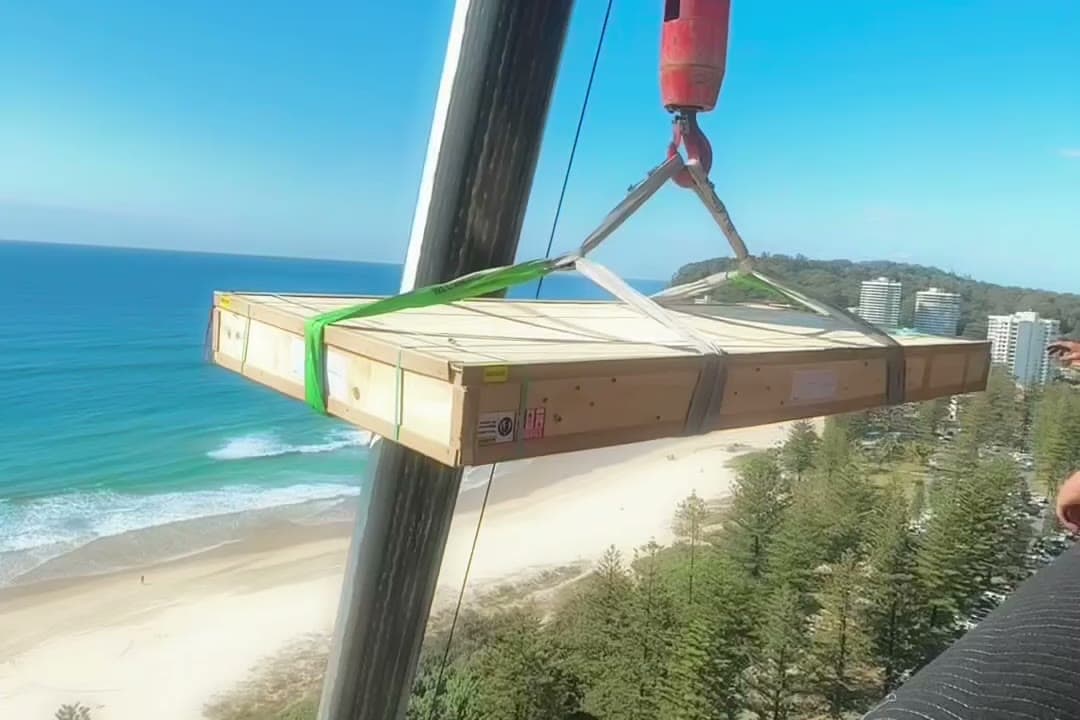
Australian housing stock includes a lot of buildings that furniture does not fit into. Narrow terraces. Apartment lifts sized for people rather than sofas. Heritage properties with original staircases. Coastal sites where the truck cannot get within fifty metres of the door. The piece still has to go in.
The planning happens before the day
Measure the tightest point, not the front door. For most properties the constraint is a stair return or a hallway corner, not the entry.
Check the lift diagonally as well as flat, and check the ceiling height inside it. A tall piece that fits the floor plate may not stand up.
Confirm parking and the distance from the vehicle to the door. A fifty metre carry changes the team size and the time.
Identify where protection is needed and what surfaces are at risk. Timber stairs, stone floors and painted corners all mark.
When it does not fit
Sometimes the answer is that it does not go through the door. Then the options are disassembly if the piece allows it, a balcony or window lift, or a crane. All three need to be identified in advance because all three need booking.
The failure mode is discovering it on the day, with a team on the clock and a client watching.
Why experience matters here
A team that has done a hundred difficult access jobs walks in and knows within a minute whether it works. That judgement is the service.
Related services
Tell us what you need.
Every proposal starts with understanding your business: what you move, how much, how often.